Introduction
When discussing corporate scandals, few names resonate as profoundly as Enron. This energy giant, once hailed as a beacon of innovation and success, unraveled in 2001 in what became one of the most infamous cases of corporate fraud in history. The collapse of Enron left investors and employees devastated, exposed critical flaws in corporate governance, and set the stage for regulatory reform that continues to shape financial oversight today.
Enron at Its Peak
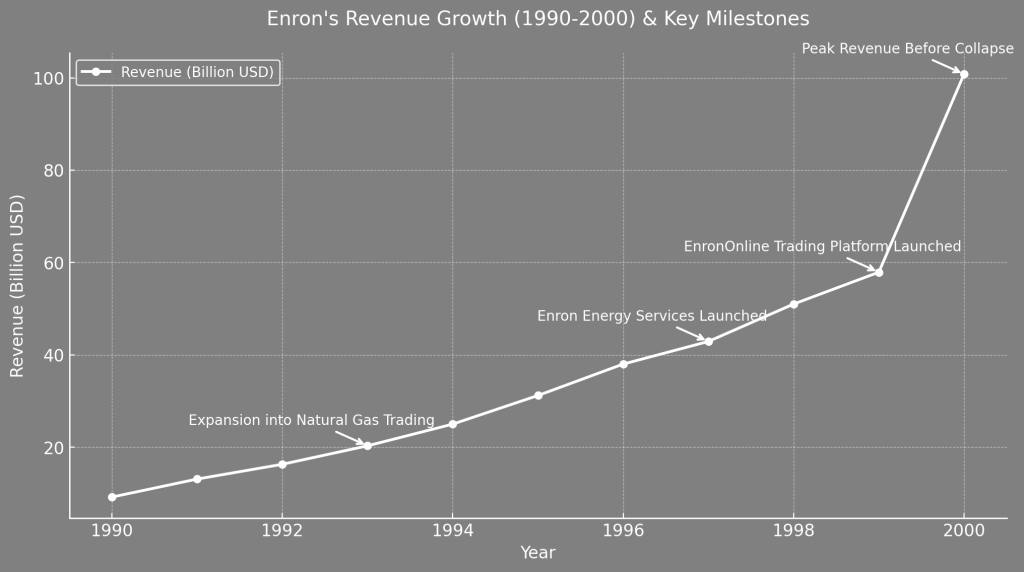
Founded in 1985, Enron started as a natural gas pipeline company. Over the years, it transformed into a global energy trader, pioneering online energy trading and securing a spot among the most admired corporations in the U.S. By the late 1990s, Enron’s reported revenues had soared, hitting $100 billion annually, fueled by its innovative business practices and high-risk ventures.
Visual Element: Enron’s Meteoric Rise
Infographic:
Fraud Type and Techniques Used
Fraud Type:
- Accounting Fraud: Misrepresenting financial statements through mark-to-market accounting.
- Corporate Deception: Concealing debt through off-balance-sheet entities.
Techniques Employed:
- Mark-to-Market Accounting: Enron reported projected future profits as if they were actual earnings.
- Special Purpose Entities (SPEs): These were used to hide debt and inflate profitability, misleading investors and analysts.
- Pressure to Conform: Employees faced intense pressure to meet unrealistic performance targets.
Visual Representation:
(photo of Enron’s headquarters in Houston with its once-iconic logo, chart showing inflated earnings and hidden liabilities)
The Unraveling of Enron
Timeline of Events:
Early 2001: Warning Signs Appear
- Enron’s stock price begins to falter amidst rumors of financial instability.
- Analysts question the opacity of its financial disclosures.
October 2001: The Tipping Point
- Enron announces a $618 million quarterly loss and writes down $1.2 billion in shareholder equity.
- Details of the company’s off-balance-sheet entities begin to emerge.
December 2001: Bankruptcy
- Enron files for Chapter 11 bankruptcy protection—at the time, the largest in U.S. history.
- Over 20,000 employees lose their jobs, and shareholders lose billions of dollars.
Visual Enhancement:
- A timeline graphic with key events leading to Enron’s collapse.
Fallout and Consequences
Financial Impact:
- Shareholders lost an estimated $74 billion between 2001 and 2002.
- Enron’s collapse erased pensions and savings for thousands of employees.
Legal Repercussions:
- Jeffrey Skilling (CEO) was sentenced to 24 years in prison (later reduced to 14 years).
- Andrew Fastow (CFO) received a 6-year prison sentence for his role in orchestrating fraudulent schemes.
- Arthur Andersen, Enron’s accounting firm, was convicted of obstruction of justice, leading to its downfall.
Visual Element: Legal Fallout
- Courtroom sketches of Skilling and Fastow.
- Breakdown of settlements and fines.
Regulatory Changes: Sarbanes-Oxley Act
The Enron scandal paved the way for the landmark Sarbanes-Oxley Act of 2002, which imposed stricter regulations on corporate governance and financial reporting. Key reforms included:
- CEO and CFO Accountability:
- Executives must personally certify the accuracy of financial statements.
- Enhanced Internal Controls:
- Mandatory audits to ensure compliance with accounting standards.
- Whistleblower Protections:
- Safeguards for employees reporting corporate wrongdoing.
Lessons Learned
- Transparency is Key:
- Complex financial structures often signal an attempt to obscure reality.
- Corporate Culture Matters:
- Toxic environments that prioritize profit over ethics can enable fraud.
- Strong Oversight is Crucial:
- Regulatory bodies, auditors, and analysts must act as independent watchdogs.
Final Thoughts
Enron’s story is more than a corporate scandal; it is a lesson in accountability and the importance of ethics in business. While regulations like Sarbanes-Oxley have since tightened oversight, the legacy of Enron serves as a cautionary tale for companies worldwide.
Call to Action
What are your thoughts on the Enron scandal? Did its fallout change your perspective on corporate accountability? Share your comments below, and don’t forget to subscribe for more deep dives into major corporate scandals!


Leave a Reply